
Introduction

| Location | Selangor Malaysia |
| Occupancy Type | Office |
| Typology | New Construction |
| Climate Type | Equatorial |
| Project Area | 4,000 m2 |
| Grid Connectivity | Grid connected |
| EPI | 35-40 kWh/m2/yr |
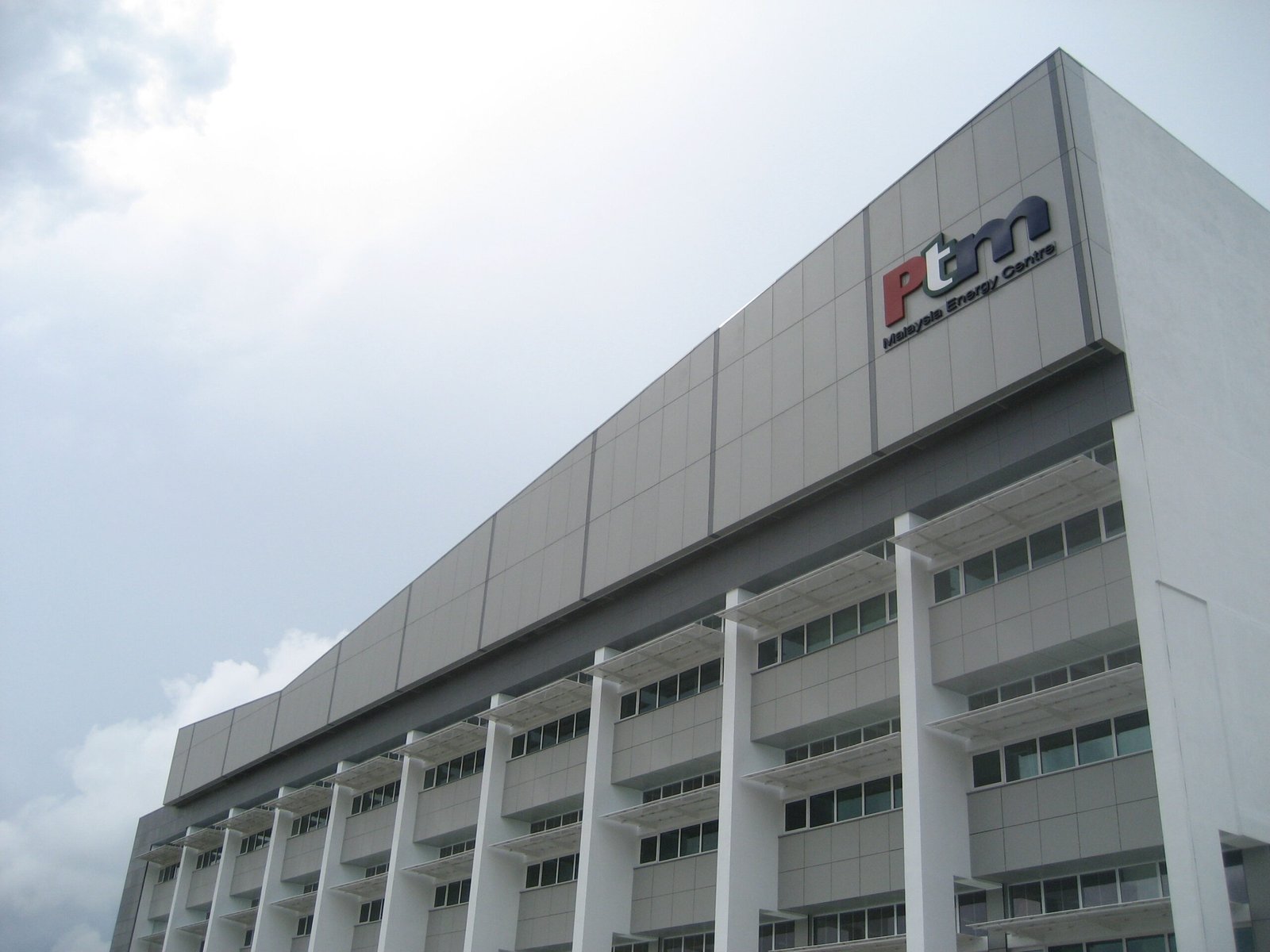
The new headquarter for Pusat Tenaga Malaysia (PTM) is designed to be a Zero Energy Office Building, or a ZEO Building. A full range of passive and active energy efficiency measures are implemented such that the building will need no more electricity than what can be produced via the building’s own Building Integrated PV system. The 4,000 m2 PTM ZEO Building is a pilot project and a research laboratory for tomorrows sustainable non-domestic buildings in the tropics.
The ZEO Building shows implementation of integrated design concepts, where active and passive energy systems are interwoven into the building itself, and where several building elements also serve as energy systems. This helps in bringing the extra costs of the building down. Advanced computer design tools have been used throughout the design process.
The building is lit primarily by daylight, supplemented by electric lighting only during very dark and overcast periods. Extensive active energy efficiency measures are implemented in the building in order to reduce the need for electricity to an absolute minimum, without compromising the request for comfortable temperature and humidity and adequate lighting. These measures include among others high efficiency pumps and fans, and use of energy efficient office equipment.
The buildings PV system is connected to the grid. Solar electricity is exported to the grid during daytime, when there is maximum draw of electricity from the grid. During night time at off peak hours, the electricity is bought back and used to run the chiller. Cooling is stored from nighttime to daytime in the concrete floor slabs and in a phase change thermal storage tank.
The Malaysian Energy Centre, Pusat Tenaga Malaysia, moved into the ZEO building in October 2007. An extensive two year monitoring and fine-tuning program is planned for the ZEO building to optimise the energy performance of the building, to establish the overall performance of the building and to establish the detailed performance of the building and its energy systems. The results of the project will be disseminated, including details of those design elements and energy systems that can be put into use to improve energy efficiency in buildings today.
The ZEO building project was supported by UNDP/GEF and by the EC-ASEAN Energy Facility (Brussels / Jakarta). Without their support, this project could not have been realised.
The Key Energy Saving Strategies
Reducing the energy consumption to approximately 40 kWh/m2 year is achieved by applying a host of energy saving strategies in building design, design of the mechanical and electric system and in choice of energy efficient office equipment. However, the following areas are the main contributors to the low energy consumption:
- An energy efficient building envelope with energy efficient double glazing and well insulated
walls and roofs. - Use of daylight as the only source of lighting during daytime.
- Use of energy efficient office equipment

The diagram above shows the influence of some of the design parameters of the building. To the left is the Energy Index of the building design as predicted by the computer modelling. Each of the bars shows the influence of changing one parameter from the present building design (the left bar).
The actual design has double glazing with low emissive coating. The daylight transmission coefficient is 50%. If the glazing were traditional double glazing, the energy consumption increases by 8%. If the glazing would only be single glazing, the energy consumption would increase by 22% compared to case 1. It is also seen that if there was no exterior shading in the form of an exterior overhang over the windows, then the energy consumption would increase by 3%, similar to if the building had windows to the east and west instead of to the north and south.
It should be noted, that the influence of orientation and shading would have been much more profound if the base case was not a building with super efficient glazing but a building with single glazing. The high performance glazing reduces the penalty of having a non-ideal orientation or having no exterior shading.
It is noted that if the building did not use 100% daylight during daytime, but had to rely on electric lighting (very energy efficient), then the energy index would increase by 35% !! If traditional office equipment were used instead of energy efficient office equipment, then the energy index would increase by another 30%.
These results of the computer modelling clearly demonstrates the importance of having high performance glazing, using daylight instead of electric lighting and using energy efficient office equipment. Without these key energy saving measures, the necessary PV area would simply be exorbitantly large and very expensive.

Building Integrated PV

The PV roof of the building serves multiple purposes. During daytime, the roof becomes the powerplant of the building, and during nighttime, the PV roof becomes the “cooling tower” for the chiller. During nighttime, the roof is be covered by a thin water film, which emits heat from the chiller to the sky by radiation and to the cool night air by evaporation and convection.
The total installed capacity of four PV systems is 85 kWp, distributed over four areas, one 45 kWp with polycrystalline PV, one 6 kWp with thin film PV, one 25 kWp monocrystalline and 10 kWp semitransparent over the buildings atrium.
Building 100% daylit during daytime

Electricity for lighting in an office building may easily consume 30 – 40 kWh/m2/year. In Malaysia, daylight can potentially cover most of that lighting load, as daylight is abundantly available outside the building throughout normal office hours 08.00 – 18.00. However there are a number of constraints that means that this potential for free daylight is not used in buildings today. Daylight is easily available near the windows, whereas it is more difficult to provide daylight deep in a building. Furthermore, admission of daylight into a room often causes glare and discomfort due to the high radiation level in Malaysia.

In order to be able to use daylight as the main light source in the PTM building, a new sealed double glazed window with integrated blinds was developed. The blinds protects against direct view of the sky through the upper daylight window. However light is reflected off an exterior light shelf and through the blinds, onto the ceiling and further to the back of the room.
Trickling Night Cooling Roof

Release of heat from the chillers will normally be via cooling towers. However, for the PTM building, another system has been implemented. The chiller runs only during night time, and the heat is released from the PV roof by trickling water over the slope of the roof. Water is added from manifolds at the ridge of the roof and collected at gutter, from where it returns to the condenser heat exchanger. Heat is released from the wet roof through radiation to the night sky, through convection and through evaporation. The water used is rainwater from the rainwater storage tank at the roof of the building.
Concrete Floor Slabs with Thermal Storage and Radiant Cooling
The chiller of the building runs only during nightime, where the concrete floor slabs with embedded PEX tubes is being cooled down. Cooling is released gradually from the floor slabs to the rooms above and below during daytime.
The concrete floor slabs will provide part of the cooling load to the rooms during daytime. This cooling is supplemented by cooling provided by a conventional air cooling system. This system is however ~ 75% smaller than a conventional system, as this air handling system need only supply fresh and dehumidified air.
The cooling which is provided by the air handling units during daytime is drawn thermal storage tanks with Phase Change Material 10°C as storage medium. So storage of cooling from night to day is provided partially by the floor slabs and partially by thermal storage tank.
Energy Efficient Office Equipment
By using only the most energy efficient office equipment available, the installed plug load can be reduced to ~ 2.5 W/m2 against normally 10 – 15 W/m2. This contributes to reducing the electricity consumption of the building. Hence, the management of PTM decided two years ago that they would from now on only purchase the most energy efficient computers, printers etc. Hence, when PTM migrates to the new building in May 2007, all equipment will be energy efficient.
Other Measures to Improve Energy Efficiency

Beyond the various innovative energy solutions mentioned above, a host of good practice and good
housekeeping measures are implemented in the design to reduce energy consumption. However,
compared to a traditional well designed building, in this case these good practice measures are being evaluated very carefully, and their performance have typically been chosen to be the best possible on the market. This is because PV electricity is expensive, and therefore more investments in better energy performance of the building can be justified.
These good practice solutions include on the architectural side use of external window shading ( the building steps ~ one meter in per floor), and use of well insulated walls and roofs. Within the regime of M&E systems, pumps and fans have very high efficiencies, and pipes and ducts are designed for very low resistances.
The air cooling system is of the Variable Air Volume type, and all pumps and fans will have Variable Speed Drives, measures that already now are now finding its way to more conventional buildings.
The most energy efficient lighting fixtures have been installed, using T5 fluorescent tubes with high frequency ballasts mounted in a very efficient fixtures. This is in order to reduce the electricity bill for lighting even further, beyond what is achieved by the use of daylight as the prime light source. In order to optimise the performance, lighting is controlled according to demand in all zones of the building using a DALI control system. The use of occupancy sensors and daylight sensors assure that lighting is only on when daylight is insufficient and only in those rooms that are occupied.